
 PollyMap
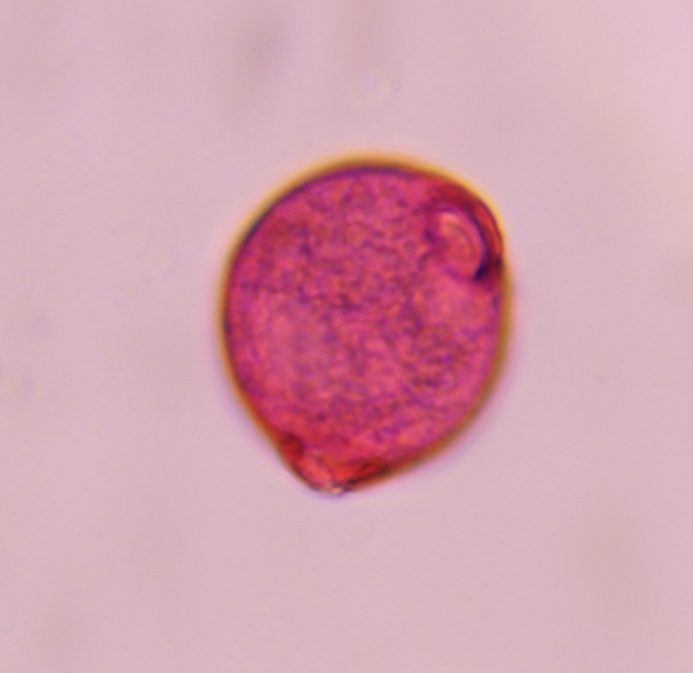
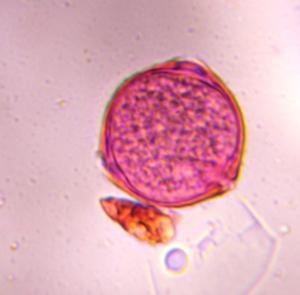
Urticaceae pollen photographed through the microscope in the PollyKit lab.
More verified photos of Urticaceae
About nettle pollen
Very small, few-pored weed pollen from nettles and pellitory, easy to overlook because of its size.
Plants that produce it
- Stinging and dwarf nettle in disturbed damp ground
- Pellitory / Parietaria along walls and irrigation
- Hop and hemp relatives in the same group
How to recognize it
Small spherical grain with two to four round pores and a finely granular wall; usually the smallest pollen on a slide.
Typical published size: 13–18 µm
Commonly confused with
- Chenopod pollen — many more pores
- Mulberry pollen — larger with two clean pores
- Small fungal spores — no pores
Allergy relevance
Moderately allergenic overall, but Parietaria is a potent allergen where it is established and can cause symptoms over a very long season.
Where it's found
Nettles occur nationwide in moist disturbed ground; pellitory is concentrated in warm coastal and urban areas.
Also searched as: nettle pollen, urtica pollen, pellitory pollen, urticaceae pollen.
Related pollen specimens
Citing this specimen: PollyMap Specimen Library. “Urticaceae — verified microscope specimen.” pollymap.com/library/specimen/urticaceae-pollen-95fb0c
Expert discussion
No published comments yet. If you study palynology or mycology, we'd value your read on this specimen.