
 PollyMap
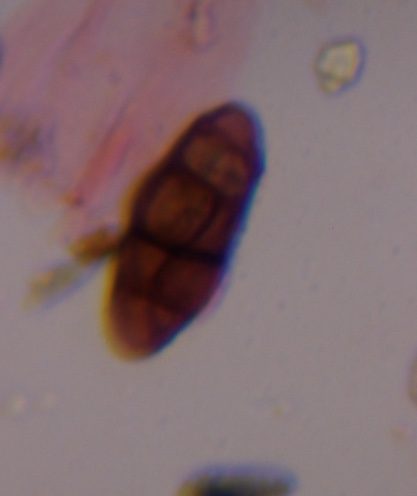
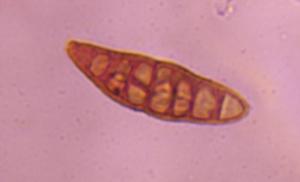
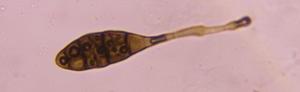
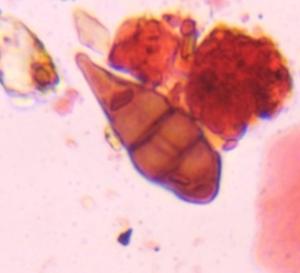
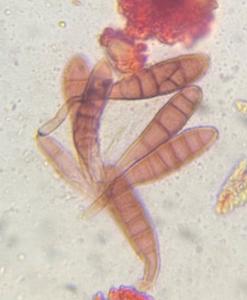
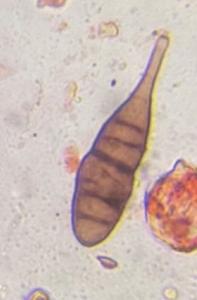
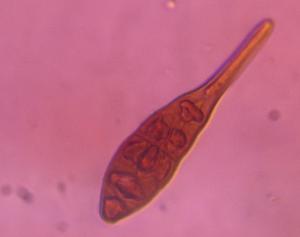
Alternaria mold spore photographed through the microscope in the PollyKit lab — verified in Arizona.
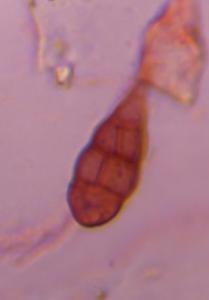
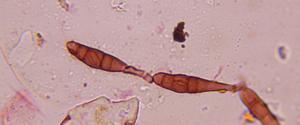
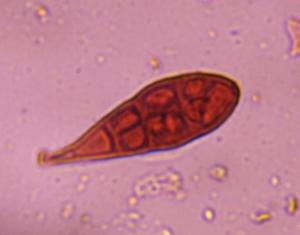
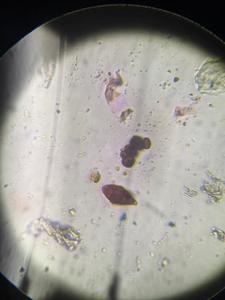
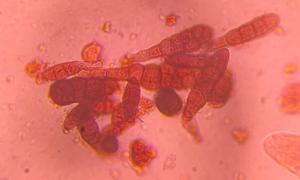
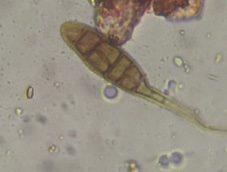
More verified photos of Alternaria
About alternaria mold spores
A dark, club-shaped mold spore that lives on dying plant material and is one of the most important outdoor mold allergens.
Where it grows
- Decaying leaves, grass clippings and garden debris
- Crop residue, hay and stored grain
- Damp soil and compost
- Damp indoor surfaces, window frames and HVAC condensate
How to recognize it
Brown, thick-walled conidium shaped like a club or a pear, divided into compartments by both crosswise and lengthwise walls, often tapering into a short beak at one end. Spores may be single or in short chains.
Typical published size: 20–60 µm long
Commonly confused with
- Ulocladium — more egg-shaped, no beak
- Stemphylium — rounder, with a strong waist at the central crosswall
- Pithomyces — surface is warty and the wall pattern is less regular
Allergy relevance
A leading mold allergen and a recognized risk factor for severe asthma, particularly in children. Counts climb in dry, windy weather and after mowing or yard work.
Where it's found
PollyMap has verified specimens of Alternaria from Arizona.
Found worldwide and in every US state, both outdoors and in damp buildings.
Also searched as: alternaria spore, alternaria under microscope, alternaria alternata, mold spore image, alternaria mold allergy.
Related mold specimens
Citing this specimen: PollyMap Specimen Library. “Alternaria — verified microscope specimen.” pollymap.com/library/specimen/alternaria-mold-spore-2cbab6
Expert discussion
No published comments yet. If you study palynology or mycology, we'd value your read on this specimen.