
 PollyMap
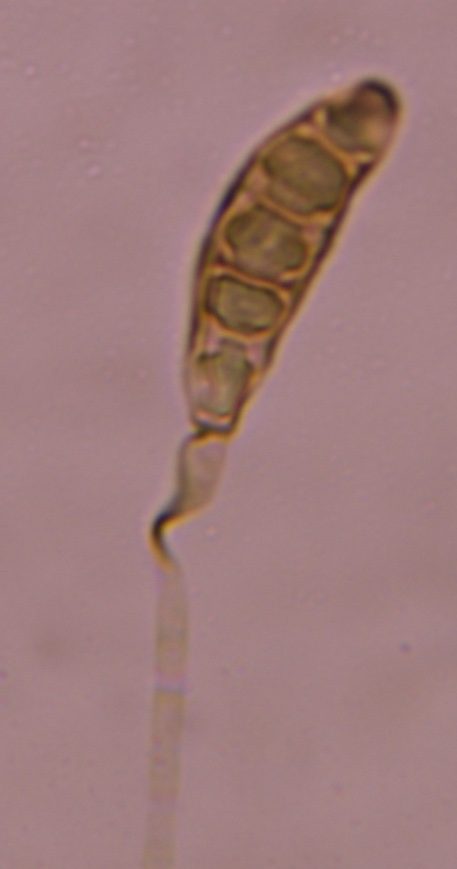
Bipolaris/Drechslera mold spore photographed through the microscope in the PollyKit lab — verified in Arizona.
More verified photos of Bipolaris/Drechslera
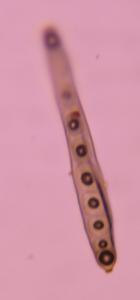
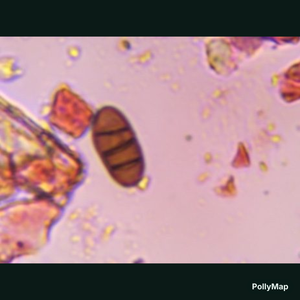
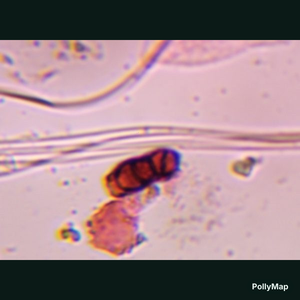
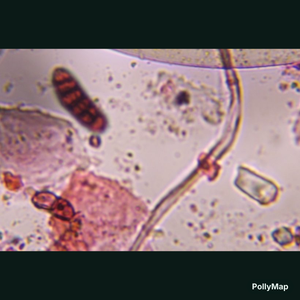
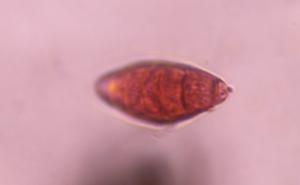
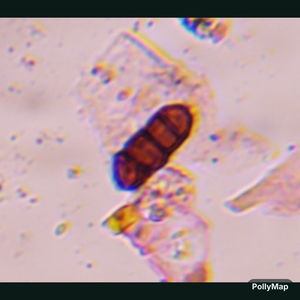
About bipolaris / drechslera mold spores
Elongated, banded mold spores that grow on grasses and cereal leaves and rise into the air when turf is mowed or disturbed.
Where it grows
- Lawn and pasture grasses with leaf spot disease
- Corn, wheat and other cereal foliage
- Grass clippings and thatch
- Soil and plant debris
How to recognize it
Cylindrical to slightly curved brown spore divided by several straight crosswalls, often with a slightly darker scar at the point of attachment. Ends are usually rounded rather than pointed.
Typical published size: 30–100 µm long
Commonly confused with
- Curvularia — distinctly bent, with one swollen darker central cell
- Pleospora and Alternaria — additional lengthwise walls
Allergy relevance
Recognized mold allergens linked to allergic rhinitis, allergic fungal sinusitis and asthma symptoms; counts spike during mowing and dry windy conditions.
Where it's found
PollyMap has verified specimens of Bipolaris/Drechslera from Arizona.
Common wherever turf or cereal crops grow, across the United States.
Also searched as: bipolaris spore, drechslera spore, helminthosporium spore, grass mold spore.
Related mold specimens
Citing this specimen: PollyMap Specimen Library. “Bipolaris/Drechslera — verified microscope specimen.” pollymap.com/library/specimen/bipolaris-drechslera-mold-spore-2d9815
Expert discussion
No published comments yet. If you study palynology or mycology, we'd value your read on this specimen.