
 PollyMap
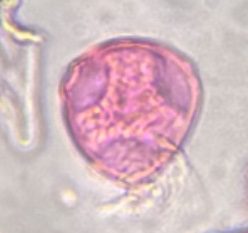
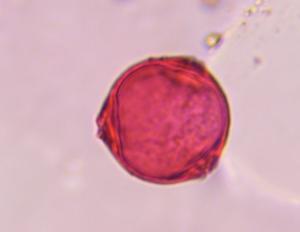
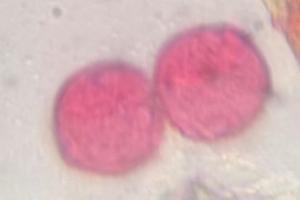
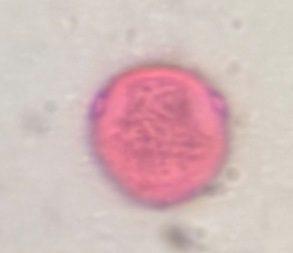
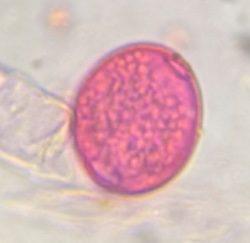
Celtis pollen photographed through the microscope in the PollyKit lab.
More verified photos of Celtis
About hackberry pollen (celtis)
Small, round, few-pored spring pollen from hackberry and desert hackberry trees.
Plants that produce it
- Netleaf hackberry along desert washes
- Desert hackberry / spiny hackberry shrubs
- Common hackberry as a street and shade tree
How to recognize it
Roughly spherical grain with three or four circular pores set in a moderately thick, finely granular wall. Outline is often slightly angular between pores.
Typical published size: 22–32 µm
Commonly confused with
- Elm pollen — more pores and a clearly rippled wall
- Mulberry pollen — two pores and thinner wall
- Nettle and hemp pollen — smaller
Allergy relevance
Moderately allergenic and an early-season contributor in the Southwest and southern Plains, often overlapping with elm and mulberry.
Where it's found
Southwest, Texas, the Plains and much of the eastern United States.
Also searched as: celtis pollen, hackberry pollen, desert hackberry pollen.
Related pollen specimens
Citing this specimen: PollyMap Specimen Library. “Celtis — verified microscope specimen.” pollymap.com/library/specimen/celtis-pollen-7eba05
Expert discussion
No published comments yet. If you study palynology or mycology, we'd value your read on this specimen.