
 PollyMap
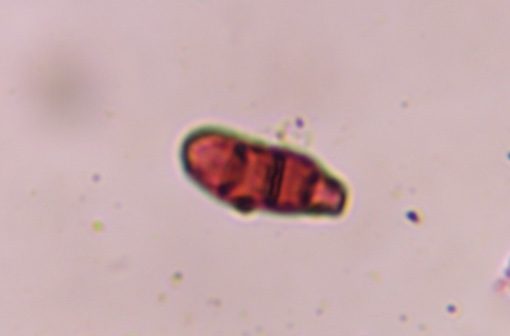
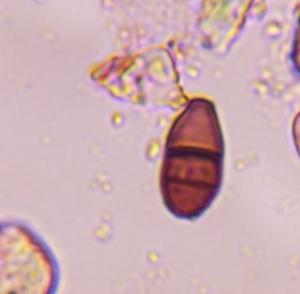
Curvularia mold spore photographed through the microscope in the PollyKit lab — verified in Arizona.
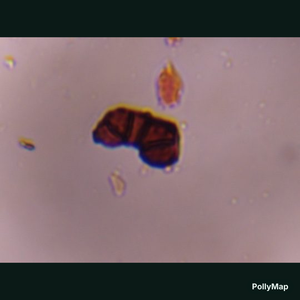
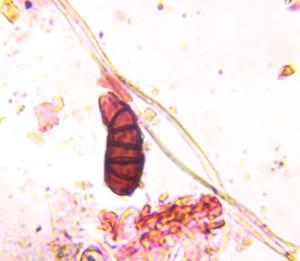
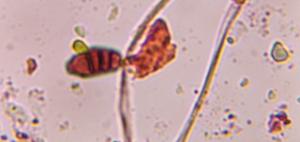
More verified photos of Curvularia

About curvularia mold spores
A curved, banded brown spore with one swollen dark cell — a distinctive grass and soil mold.
Where it grows
- Diseased lawn and pasture grasses
- Soil, mulch and plant debris
- Cereal crops and seed
- Damp indoor materials
How to recognize it
Boomerang-curved spore with three or four crosswalls, where one off-centre cell is visibly larger and darker than the rest — the bend comes from that swollen cell.
Typical published size: 20–40 µm long
Commonly confused with
- Bipolaris — straight or only slightly curved, cells even in size
- Alternaria — beaked and with lengthwise walls
Allergy relevance
A known cause of allergic rhinitis and allergic fungal sinusitis, and a contributor to asthma symptoms in sensitized people.
Where it's found
PollyMap has verified specimens of Curvularia from Arizona.
Common in warm, humid and irrigated areas throughout the United States.
Also searched as: curvularia spore, curvularia under microscope, curved mold spore.
Related mold specimens
Citing this specimen: PollyMap Specimen Library. “Curvularia — verified microscope specimen.” pollymap.com/library/specimen/curvularia-mold-spore-arizona-601ca2
Expert discussion
No published comments yet. If you study palynology or mycology, we'd value your read on this specimen.