
 PollyMap
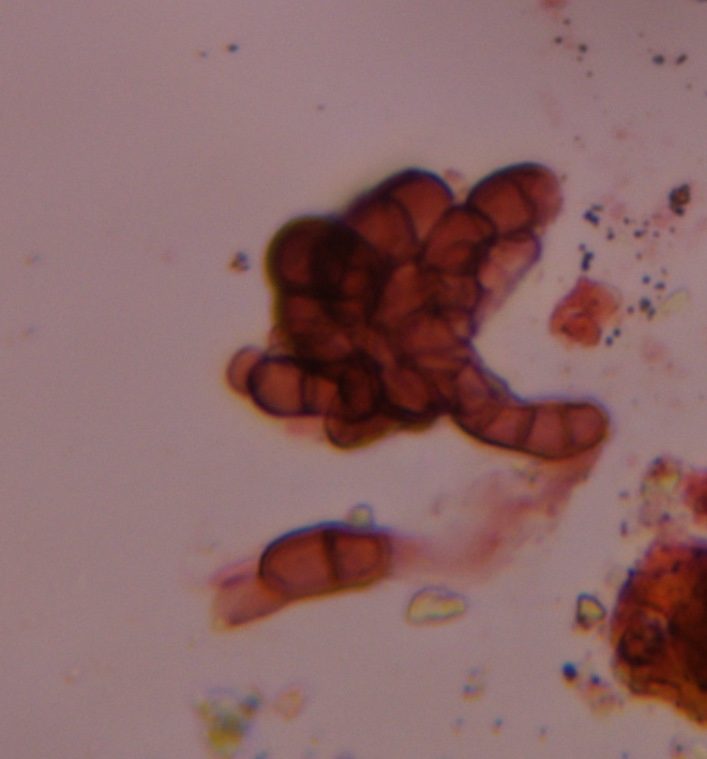
Torula mold spore photographed through the microscope in the PollyKit lab — verified in Arizona.
More verified photos of Torula
About torula mold spores
Chains of small dark beads — a distinctive mold of dead plant material and damp buildings.
Where it grows
- Dead grass, straw and leaf litter
- Wet paper, wood and drywall
- Soil and compost
How to recognize it
Short chains of rounded, warty brown cells that look like a string of beads; individual cells separate easily, so single warty spheres are also common.
Typical published size: 4–10 µm per cell
Commonly confused with
- Epicoccum — much larger with internal walls
- Smut spores — not chained
Allergy relevance
A moderate mold allergen and, indoors, another indicator of sustained moisture problems.
Where it's found
PollyMap has verified specimens of Torula from Arizona.
Worldwide.
Also searched as: torula spore, torula herbarum, chained mold spore.
Related mold specimens
Citing this specimen: PollyMap Specimen Library. “Torula — verified microscope specimen.” pollymap.com/library/specimen/torula-mold-spore-d0a578
Expert discussion
No published comments yet. If you study palynology or mycology, we'd value your read on this specimen.