
 PollyMap
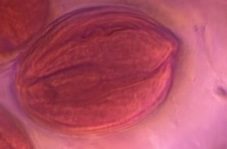
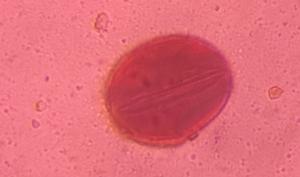
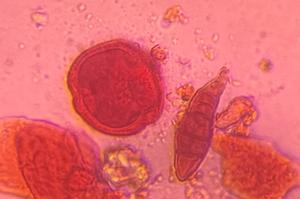
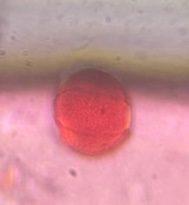
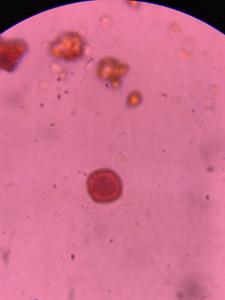
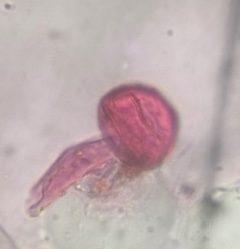
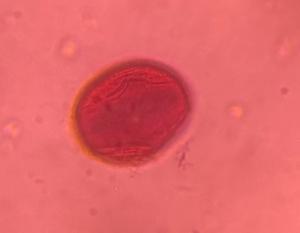
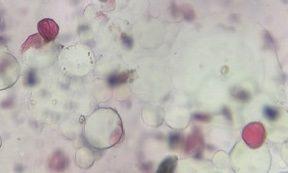
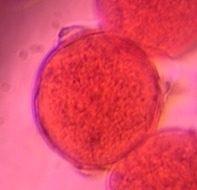
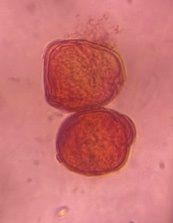
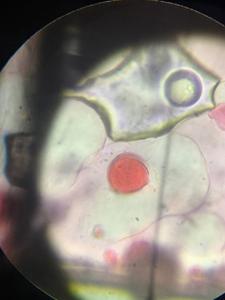
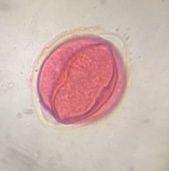
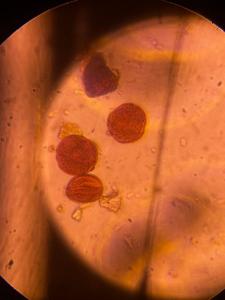
Oak pollen photographed through the microscope in the PollyKit lab — verified in Arizona.
More verified photos of Oak
About oak pollen
The yellow spring tree pollen that coats cars and patios, produced in enormous quantity by oaks.
Plants that produce it
- Live oak (Quercus virginiana, Q. agrifolia)
- Emory, Arizona white and Gambel oak in the Southwest
- Red, white, post and pin oak across the East and Midwest
- Scrub and shrub oaks at higher desert elevations
How to recognize it
Oblong to boat-shaped grain with three long furrows running pole to pole (tricolpate) and a finely granular, scabrate surface. Grains are often seen in side view with the furrows pinched shut.
Typical published size: 25–40 µm
Commonly confused with
- Mulberry pollen — smaller, rounder and with only two pores
- Elm pollen — squatter with five pores and a rippled wall
- Hackberry pollen — rounder with distinct circular pores rather than long furrows
Allergy relevance
Moderately to strongly allergenic, and sheer volume makes it one of the biggest spring triggers in oak country. Expect itchy eyes, sneezing and nasal congestion during the bloom.
Where it's found
PollyMap has verified specimens of Oak from Arizona.
Native oaks grow in nearly every US state; the heaviest airborne loads occur across the South, Texas, the Midwest and coastal California.
Also searched as: oak pollen, quercus pollen, live oak pollen, oak pollen under microscope, what does oak pollen look like.
Related pollen specimens
Citing this specimen: PollyMap Specimen Library. “Oak — verified microscope specimen.” pollymap.com/library/specimen/oak-pollen-arizona-a36e58
Expert discussion
No published comments yet. If you study palynology or mycology, we'd value your read on this specimen.