
 PollyMap
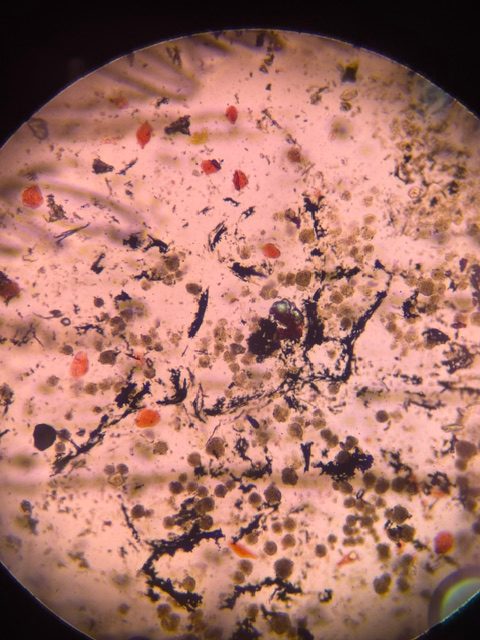
Unknown Dust/Soot house dust photographed through the microscope in the PollyKit lab — verified in Arizona.
About house dust particle
Indoor dust material — mostly shed skin flakes, fibers and mineral grains — the matrix that carries dust mite allergen.
Plants that produce it
- Shed human and pet skin
- Textile and paper fibers
- Tracked-in soil and mineral dust
How to recognize it
Skin squames appear as thin, irregular, translucent plates with folded edges. Dust mite bodies and fragments, when present, show jointed legs and a striated cuticle.
Allergy relevance
Dust mites feed on shed skin, so skin-rich dust marks the habitat that produces the allergen. Dust mite sensitivity is a leading cause of year-round indoor allergy and asthma.
Where it's found
PollyMap has verified specimens of Unknown Dust/Soot from Arizona.
Every occupied building; mite populations are highest in humid climates.
Also searched as: house dust under microscope, skin flake microscope, dust mite allergen.
This particle has not been identified yet. If you recognize it, the expert discussion below is the place to say so — accepted corrections are credited.
Related dust specimens
Citing this specimen: PollyMap Specimen Library. “Unknown Dust/Soot — verified microscope specimen.” pollymap.com/library/specimen/unknown-dust-soot-arizona-dcf253
Expert discussion
No published comments yet. If you study palynology or mycology, we'd value your read on this specimen.